Reason for study: Practice planning a growth experiment by analyzing funnel data and proposing actions, without executing changes on the store being analyzed.
Funnel analyzed: view_item → add_to_cart → begin_checkout → purchase
Study Steps:
- Accessed GA4 Funnel Exploration
I entered the GA4 demo account and navigated to Explore → Funnel exploration to analyse the e-commerce funnel. - Defined Funnel & Baseline
I defined the funnel steps (view_item → add_to_cart → begin_checkout → purchase) using All Users to establish baseline conversion rates across the full funnel. - Performed Device Comparison
I compared Mobile and Desktop traffic using segment comparisons to understand how conversion behaviour differed between devices. - Identified Observations & Insights
I analysed the funnel results to identify where the largest drop-offs occurred and which steps showed the most friction. - Formulated Hypotheses
Based on the observed drop-offs, I formulated hypotheses explaining why users might be leaving the funnel at specific steps. - Proposed Improvement Actions
I suggested realistic and general improvement actions that could potentially reduce friction, without implementing or testing them. - Documented Findings in Google Sheets
After completing the GA4 analysis, I documented all metrics, observations, hypotheses, proposed actions, and KPIs in Google Sheets.
Detailed Walkthrough of the Experiment
1,
I entered GA4’s Funnel Exploration view which allows me to analyze multi-step customer journeys.
2,
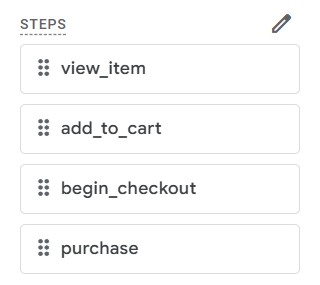
I defined the funnel steps in GA4 (for all users), which allowed me to track the potential customers progression from product view (view_item) to completed purchase (purchase).
3,
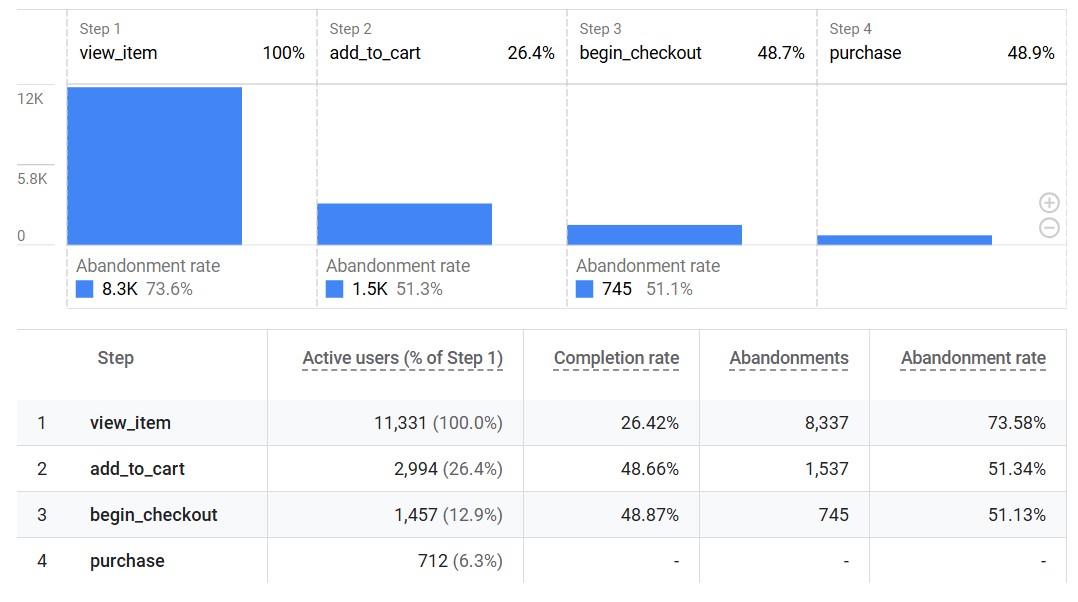
I viewed the funnel results in GA4, which allowed me to see conversion percentages for each step of the e-commerce funnel, from product view to purchase.
4,
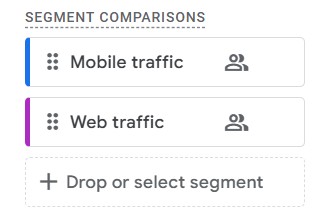
I selected mobile and desktop traffic in segment comparisons, which allowed me to compare how potential customers on the two different devices move through the funnel.
5,
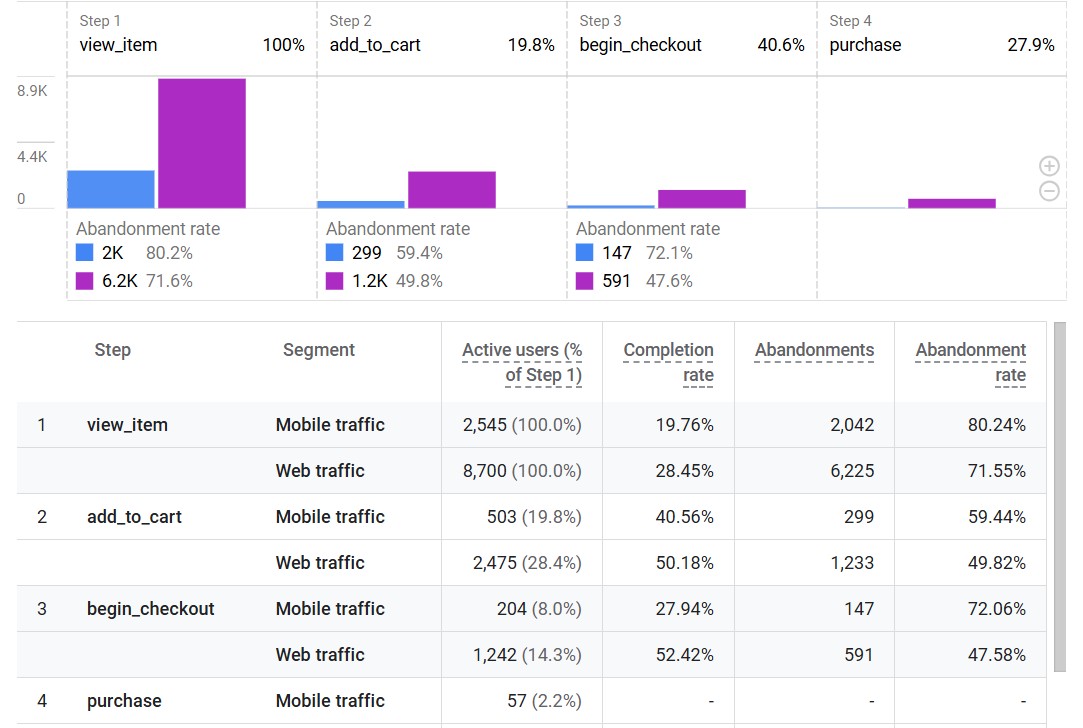

I reviewed the funnel results split by mobile and desktop.
6,



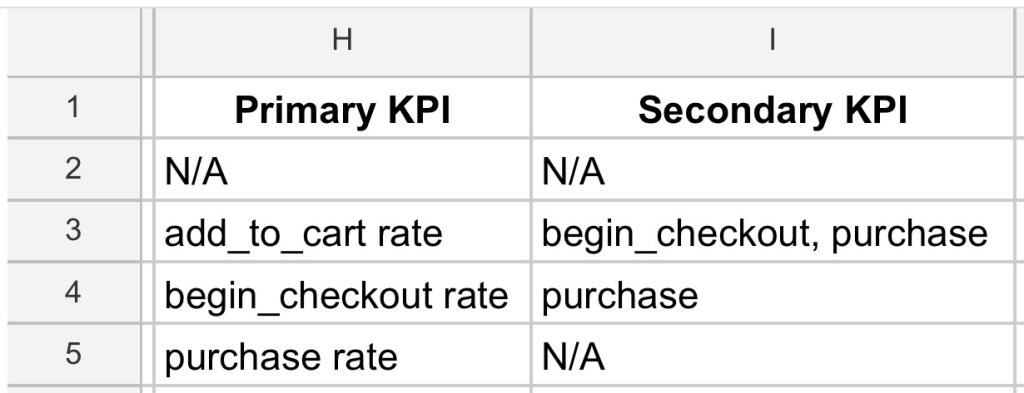
I compiled the funnel metrics into Google Sheets, including conversion rates for all users across devices, which allowed me to document the full funnel baseline alongside observations, hypotheses, and proposed actions in one structured view.
Context & Purpose of the Study
This study represents my first theoretical funnel analysis exercise and focuses on the early, exploratory phase of a growth process. The goal was to practice analysing e-commerce funnel data in GA4, identifying where users drop off, and reasoning about potential improvement opportunities.
The suggested actions are illustrative and not intended to optimize the specific e-commerce store analysed. Instead, the focus is on learning how to structure funnel analysis, identify problems worth testing, and prepare a solid foundation for future experimentation.
 home
home 